








What You Get
Test strategy built around your development process — not a generic checklist dropped on your team
1Manual QA and exploratory testing by engineers who think like adversarial users
2Security testing and vulnerability assessments against OWASP Top 10
3Clear test reports with bug severity, reproduction steps, and fix recommendations
4Automated testing frameworks integrated into your CI/CD pipeline
5Performance and load testing to establish baselines and find breaking points before launch
6Accessibility testing against WCAG 2.1 AA — functional checks, not just color contrast
7Continuous testing on every commit — bugs caught in the pipeline, not in production
8Process & Deliverables
Test Planning
Before writing a single test case, we map the full testing scope. We analyze your product, identify the highest-risk areas, define what needs manual attention versus what can be automated, and document the strategy in a format your engineering team can actually use.
Deliverables:
Test strategy document
Risk assessment and priority matrix
Test environment requirements
Automation vs manual split recommendation
Testing tools and framework selection
Estimated effort and timeline breakdown
Test Case Design
We write test cases that cover the full product surface — functional flows, edge cases, error states, and boundary conditions. Each test case is written to be reproducible by anyone on the team, with clear preconditions, steps, and expected outcomes.
Deliverables:
Full test case library (organized by feature and priority)
Edge case and negative test scenarios
Regression test suite baseline
Exploratory testing charters for high-risk areas
Test data requirements and setup guide
Test Automation Setup
We build the automation infrastructure from the ground up — selecting the right framework for your stack, writing the first automated suites, and integrating everything into your CI/CD pipeline so tests run on every commit. Automation doesn't replace manual testing; it handles the repetitive layer so manual effort goes where it actually matters.
Deliverables:
Automated test framework setup (Selenium, Playwright, Cypress, or Appium)
CI/CD integration (GitHub Actions, GitLab CI, or Jenkins)
Automated regression suite covering critical user flows
Reporting dashboard with pass/fail history
Documentation for adding new tests as the product grows
Test Execution & Reporting
Automated tests run on every build. Manual and exploratory testing happens before every release. Every bug report includes severity classification, exact reproduction steps, environment details, and a suggested fix direction. Nothing gets filed as "it broke" without the information developers need to act on it.
Deliverables:
Test execution report per sprint/release
Bug reports with severity, steps to reproduce, and environment details
Coverage metrics and open issue log
Regression pass/fail summary
Release sign-off checklist
Relevant Case Studies

QA Engineering for a Multi-Platform Streaming Solution
Manual QA • Performance Testing • Cross-platform Testing • QA Process Setup

Manual QA Engineering for a Global Fashion eCommerce Platform
Manual QA • Localization Testing • Cross-platform Testing • Payment Testing
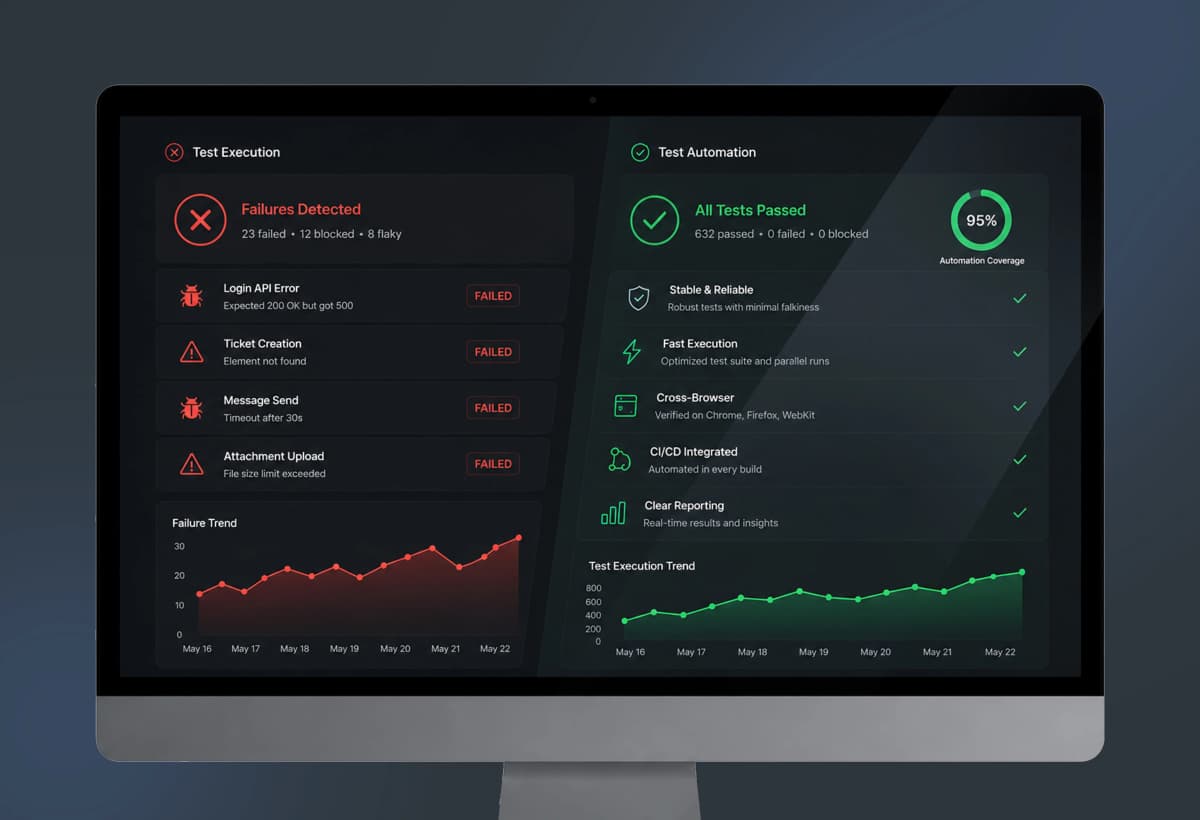
Test Automation Engineering for an Enterprise Customer Support Platform
QA Automation • Test Framework Migration • CI/CD Integration
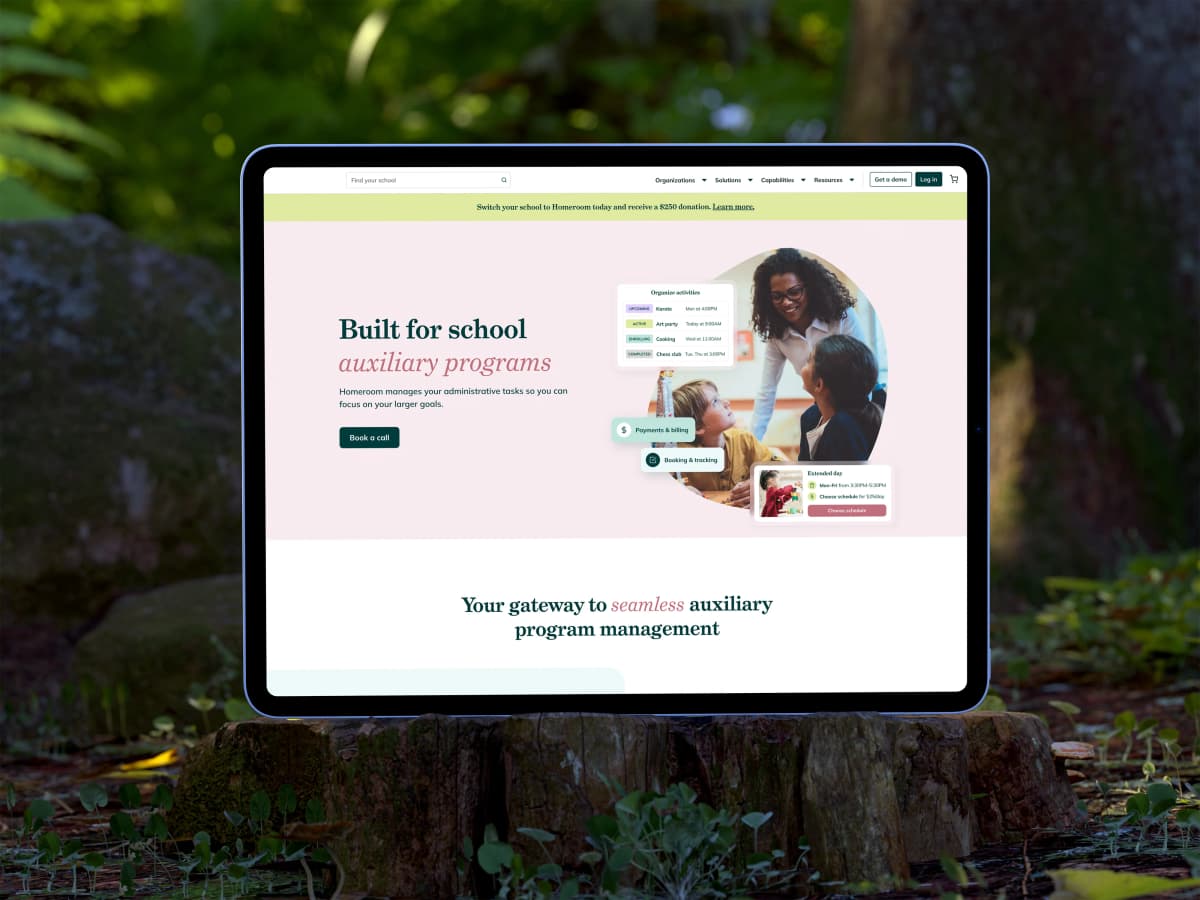
Manual QA Engineering for an After-School Program Management Platform
Manual QA • Functional Testing • Cross-platform Testing • Test Documentation
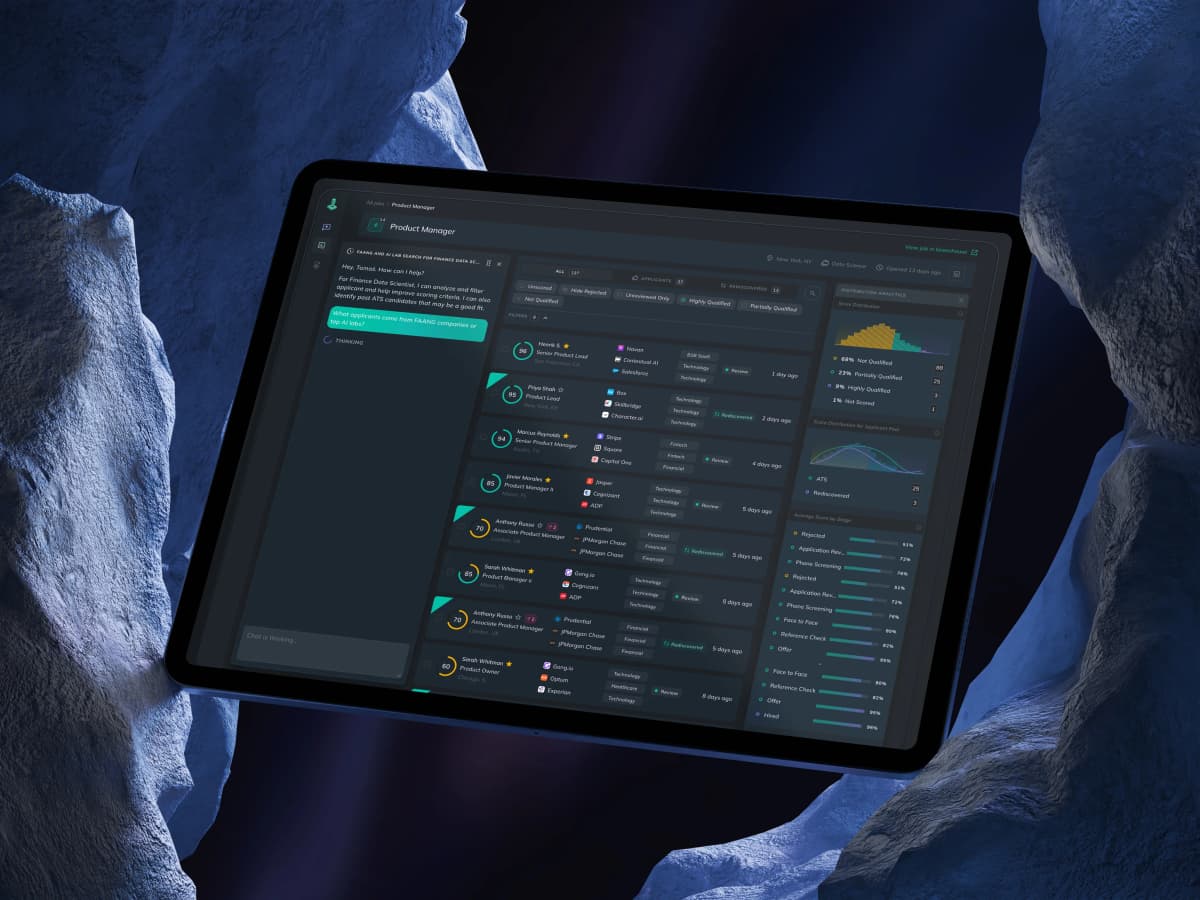
Manual QA Engineering for an AI-Powered Recruiting Platform
Manual QA • Test Management Implementation • Cross-platform Testing
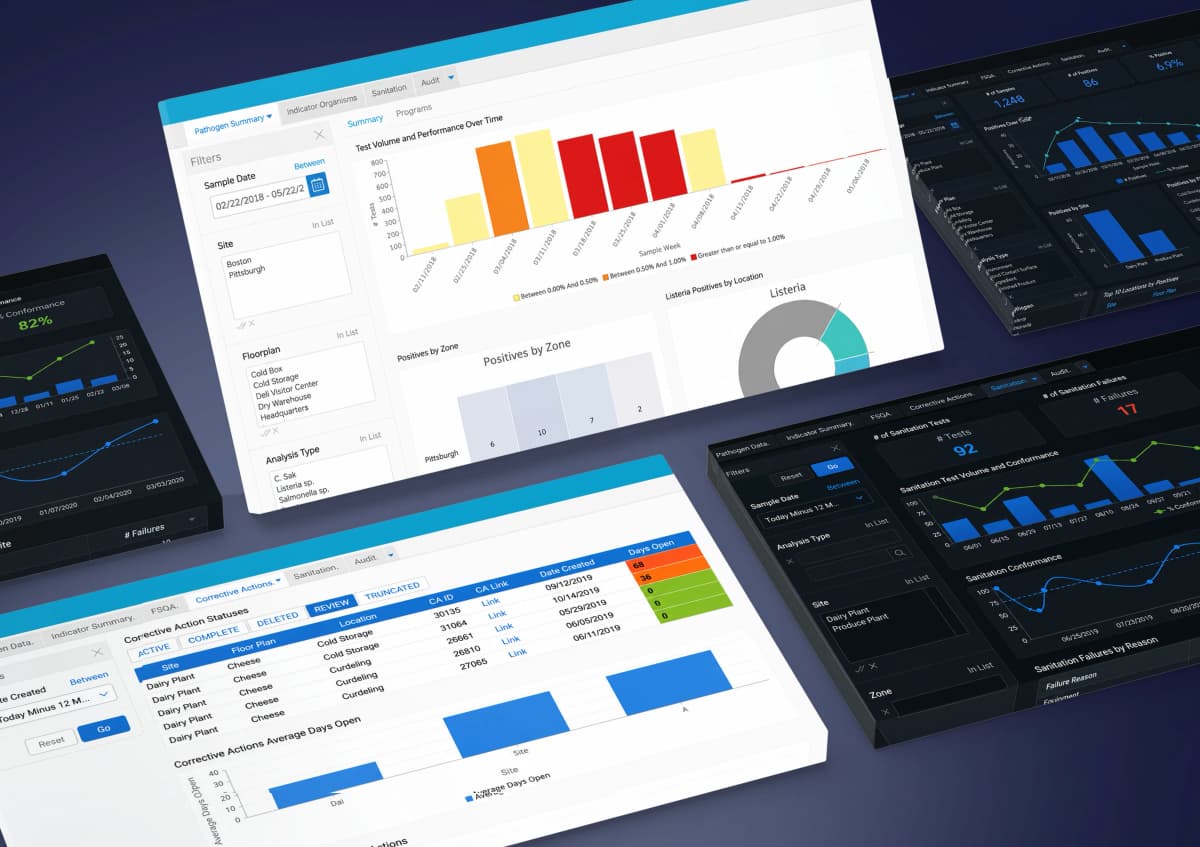
Test Automation Engineering for a Food Safety Intelligence Platform
QA Automation • Framework Architecture • CI/CD Integration
Engagement & Pricing
QA scope depends on product complexity, number of platforms, and how much automation infrastructure already exists. Get in touch and we'll size the engagement honestly based on what you actually need.
QA Audit
A one-time review of your current product and testing coverage.
Visibility & insight
We go through your product, your existing test coverage, and your release process — and tell you exactly what's missing, what's risky, and what to fix first. No ongoing commitment required.
Full product walkthrough and exploratory testing session
Current test coverage assessment
Risk matrix with prioritized findings
Automation readiness evaluation
Written recommendations report
1-hour debrief call with your engineering team
Project-Based QA
QA coverage for a defined release, sprint cycle, or product launch.
Scope & validation
We embed QA into a specific phase of your development — a major release, a new feature set, or a product launch. Fixed scope, defined deliverables, clear timeline.
Test planning and case design for the defined scope
Manual and automated test execution
Performance and accessibility testing
Bug reporting with full reproduction documentation
Release sign-off report
CI/CD integration for automated regression
Dedicated QA Engineer
A senior QA engineer embedded in your team on an ongoing basis.
Continuity & control
One or more dedicated QA engineers working inside your sprint cycle — attending standups, testing every feature before it ships, maintaining the regression suite, and owning the quality bar for your product.
Senior QA engineer (full-time or part-time)
Sprint-integrated testing aligned to your release cadence
Ongoing regression suite maintenance and expansion
Performance and security testing on major releases
Weekly quality metrics report
Scales up for larger releases, down during quiet periods
QA Tools & Frameworks
Web Automation
Mobile Automation
API Testing
Performance
Security
Management
Frequently Asked Questions
QA (quality assurance) testing is the process of verifying that a software product works the way it's supposed to — across different browsers, devices, user flows, and edge cases — before it reaches real users.
It matters because bugs found in production cost significantly more to fix than bugs found in testing. They also cost in a different currency: user trust. A checkout that breaks once loses customers who may never come back. QA isn't an optional final step — it's the difference between shipping with confidence and shipping with your fingers crossed.
Manual testing means a human tester goes through the product — following scripted test cases and exploring without a script to find unexpected behavior. It's essential for anything requiring judgment: usability issues, visual regressions, and edge cases that are hard to predict in advance.
Automated testing means code runs a defined set of checks on every build. It's fast, repeatable, and reliable for regression — verifying that nothing broke when new code was added. It can't replace manual testing, but it handles the repetitive layer so human attention goes where it matters most.
Most products need both. We'll tell you the right split based on your release cadence and risk profile.
A one-time QA audit starts around $2,500. Project-based QA for a defined release scope typically runs $5,000–$20,000 depending on the number of platforms, features, and whether automation setup is included.
An embedded QA engineer on a monthly basis starts from $3,000/month. The most cost-effective approach depends on where you are in the product lifecycle — a scrappy MVP needs different coverage than a product shipping to 100,000 users.
QA isn't a phase at the end of a sprint — it runs in parallel with development. Our QA engineers attend sprint planning to flag testability risks early, write test cases for new features as they're being built, and test completed work before it moves to staging.
Automated regression runs on every commit. Manual exploratory testing happens before each release. By the time a sprint ends, everything in it has been tested — not queued for a separate QA phase that delays the next sprint.
Functional testing — verifying features work as specified across all user flows and edge cases.
Regression testing — confirming that new code hasn't broken existing functionality.
Performance and load testing — establishing response time baselines and finding the point where the system starts to degrade under concurrent users.
Security testing — checking for OWASP Top 10 vulnerabilities including injection, broken authentication, and sensitive data exposure.
Accessibility testing — WCAG 2.1 AA compliance covering contrast, keyboard navigation, screen reader behavior, and touch targets.
API testing — validating request/response contracts, error handling, and authentication flows independently of the UI.
Yes, and we do it regularly. We start with a coverage audit — mapping what exists, what's fragile, and what the highest-value areas are to automate first.
We don't automate everything at once. We prioritize the critical user flows, get those stable, then expand coverage incrementally. An automation suite that's too ambitious gets abandoned; one that starts focused and grows with the product actually gets used.
Yes. Performance testing covers response times, page load under normal conditions, and Core Web Vitals compliance. Load testing simulates concurrent users to find the point where the system starts to slow down or fail — before a real traffic spike does it for you.
We establish a baseline early in the project, then retest before major releases. If a new feature ships and response times jump by 40%, you want to know before it reaches production.
Every bug report we file includes: severity level (critical/major/minor/cosmetic), exact steps to reproduce, the environment it was found in (browser, OS, device), screenshots or screen recordings, and — where relevant — a note on the likely cause or affected component.
Sprint and release reports include total test cases executed, pass/fail breakdown by feature area, open bug counts by severity, coverage metrics, and a clear release recommendation. The goal is a report your PM and engineering lead can read in five minutes and make a decision from.