Industry
Service We Provided
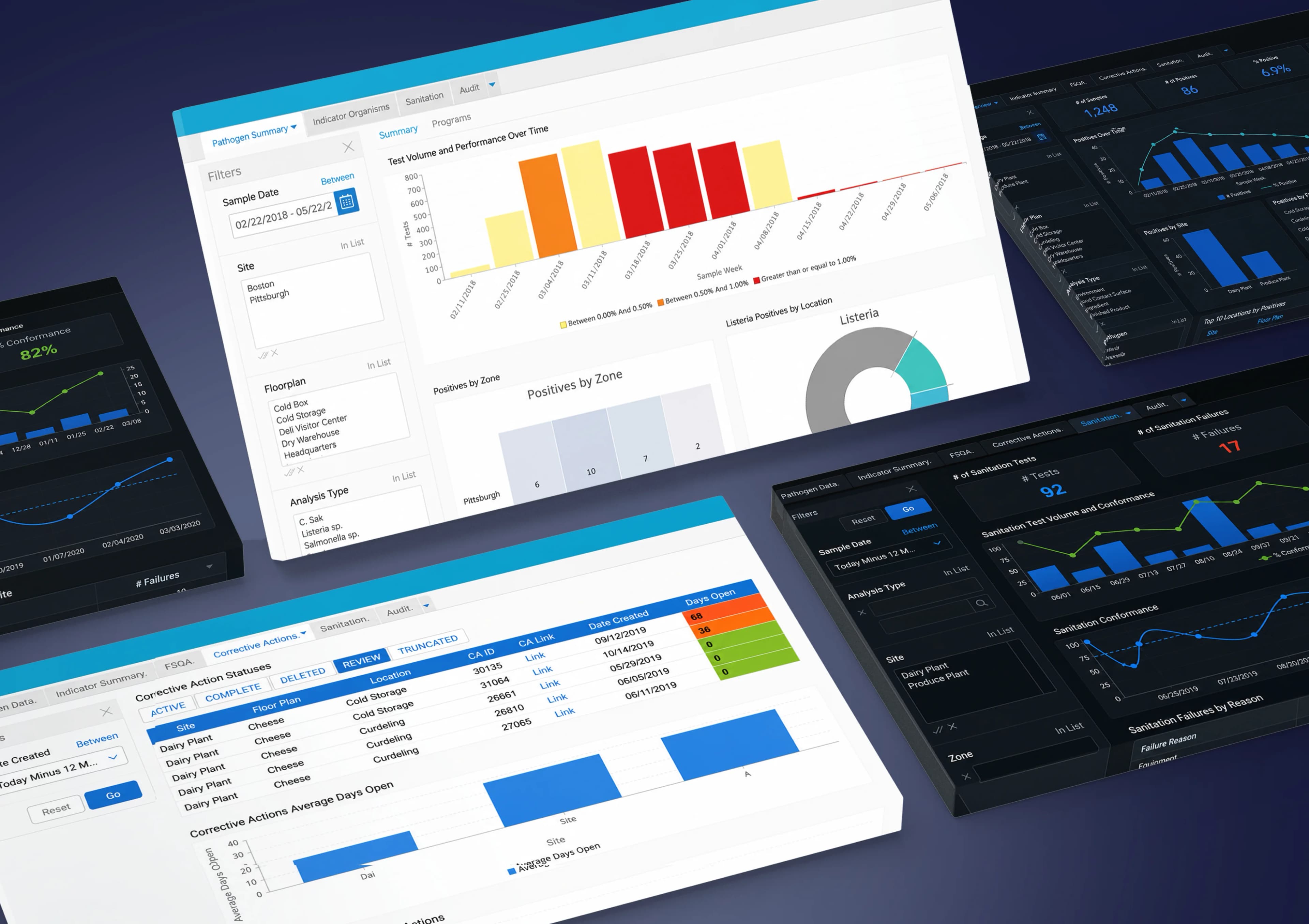
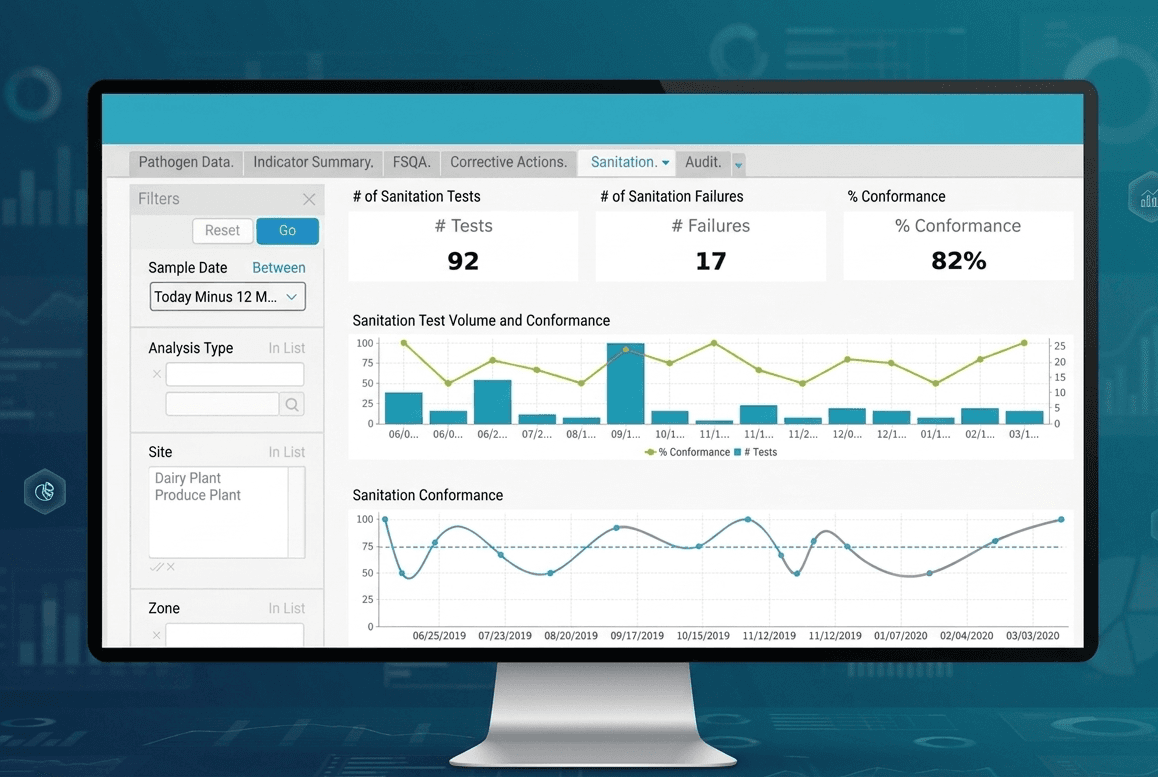
An integrated food safety management platform used by food producers and safety executives to centralize compliance workflows. The system covers environmental monitoring scheduling and auditing, product testing from raw materials through finished goods, sanitation workflow management, conformance tracking, and analytics reporting — all within a single interface.
01 — Build an automation testing practice from scratch on a large, actively expanding platform.
02 — Achieve 100% smoke coverage and maximum feasible regression coverage.
03 — Reduce manual testing burden by automating repeatable test cycles.
04 — Establish a CI/CD-integrated pipeline with real-time reporting and notifications.
05 — Train manual QA team members to participate in and maintain the automation framework.
Framework Architecture — Built the test suite using App Action and Page Object patterns with a logically separated file structure for selectors, models, scenarios, data, and configuration. All tests designed to be fully independent with automatic database cleanup after each spec.
Coverage Build-out — Prioritized smoke coverage first, reaching 100%, then systematically expanded regression coverage to approximately 60% with ongoing growth.
Parallel Execution — Worked with the development team to redesign the test environment to support parallel test execution, significantly reducing pipeline runtime.
CI/CD Integration — Synchronized Jenkins, Cypress Dashboard, and Bitbucket pipelines to trigger on every push to master and run on a daily schedule. Completion notifications posted automatically to Microsoft Teams.
Code Quality Controls — Integrated ESLint for code standards enforcement and Husky as a pre-commit hook to catch errors before they reached the master branch.
Manual QA Integration — Brought manual testers into the code review process to verify logical accuracy of automated scenarios and build automation literacy across the broader team.
Challenge 1 — No automation existed on a large, complex platform The platform had numerous interconnected modules with no automation coverage. We built the framework architecture first, then expanded coverage systematically rather than trying to automate everything at once.
Challenge 2 — Test environment didn't support parallel execution Initial infrastructure constraints meant tests could only run sequentially, creating long pipeline runtimes. Working with the development team, we redesigned the environment to support parallel execution.
Challenge 3 — Existing test cases written for manual execution Many existing cases lacked the structure needed for reliable automation. We rewrote and updated them as part of the framework build, with manual team members involved in logic verification throughout.
Test Framework: Cypress 12
Reporting: Cypress Dashboard, Mochawesome
CI/CD: Jenkins, Bitbucket
API Reference: Postman
Code Quality: ESLint, Husky
Language: JavaScript
Defect Tracking: Jira
The client left with a working automation practice — not just tests, but a full framework with CI integration, code quality controls, real-time reporting, and a manual QA team that understood and could maintain what was built. The engagement continues, with localization testing, load testing, and expanded API coverage planned as the next phase.
See how we've helped product companies ship faster, scale smarter, and wow users.

Most accessibility issues reach production undetected. Here’s why automated scanning alone isn’t enough – and what a complete testing process actually looks like.

A practical guide to hiring developers — from defining requirements to evaluating technical skills and choosing the right collaboration model.
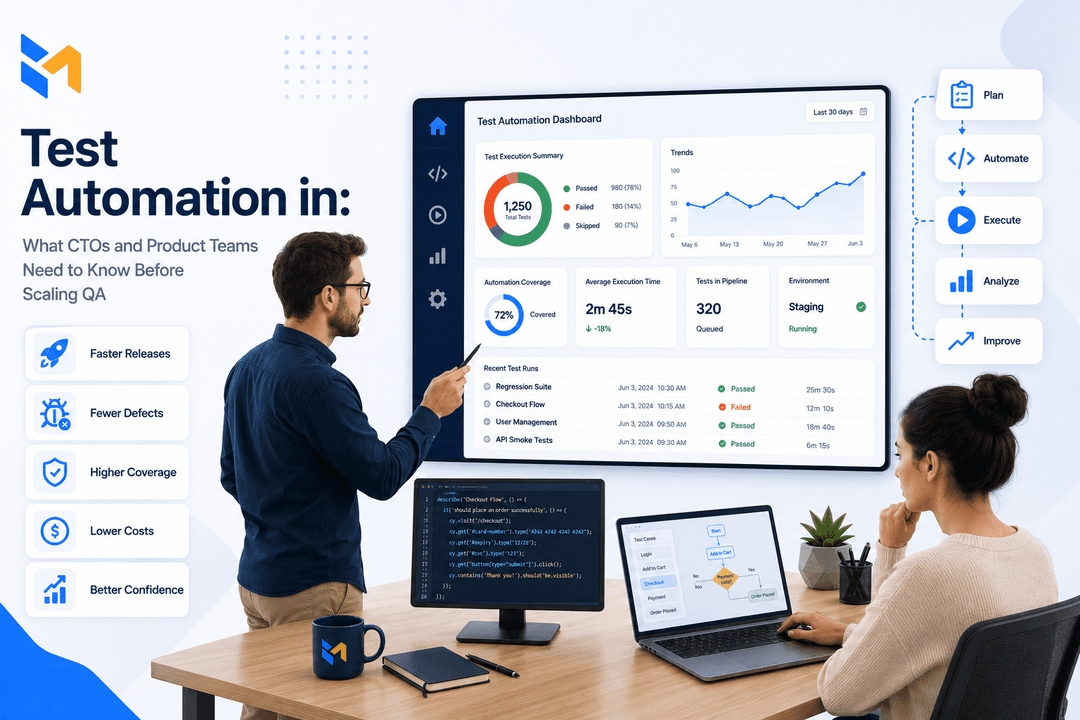
Discover how automated testing integrates with CI/CD pipelines and helps engineering teams release software faster and more reliably.
© 2026 Basmar Software. All rights reserved.